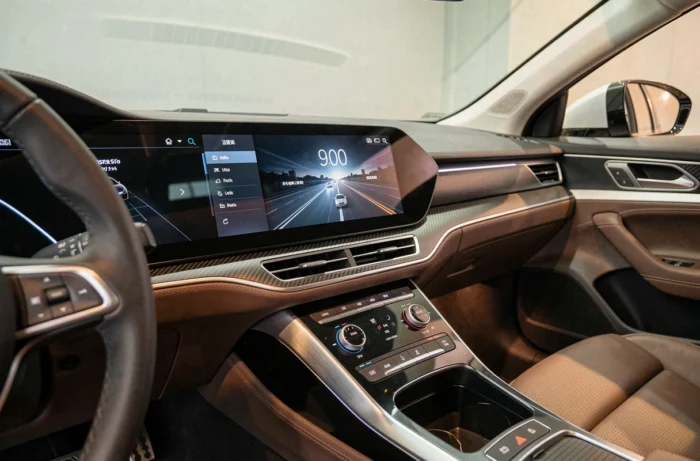
A highway journey, cruise control engaged, and the car brakes itself because a slower vehicle has just merged in front. We hardly pay attention to it anymore, while this scenario was considered science fiction just ten years ago. Automotive innovations in 2024 are not limited to touchscreen gadgets. They involve regulations, cybersecurity, and how we physically interact with the vehicle.
Mandatory safety in the EU: what changes for drivers
Since July 2024, every new vehicle registered in the European Union must be equipped with several active safety devices. Among them, Intelligent Speed Assistance (ISA) and the Event Data Recorder (EDR) are the most visible in daily use.
ISA does not block the accelerator. It alerts the driver when they exceed the speed limit detected by the front camera and mapping data, then automatically reactivates at the next start. Therefore, it can be temporarily ignored, but it always comes back.
The EDR, on the other hand, is not a tracker. It does not continuously monitor trips. Its role is limited to recording certain data around a collision (speed, status of safety systems). Additional details about these tech features can be found by browsing auto-hightech.fr, which follows the latest news in embedded technologies.
The distinction is useful: many drivers still confuse the EDR with a permanent black box. In practice, the recorder only activates during a crash or critical braking.
Remote updates and automotive cybersecurity
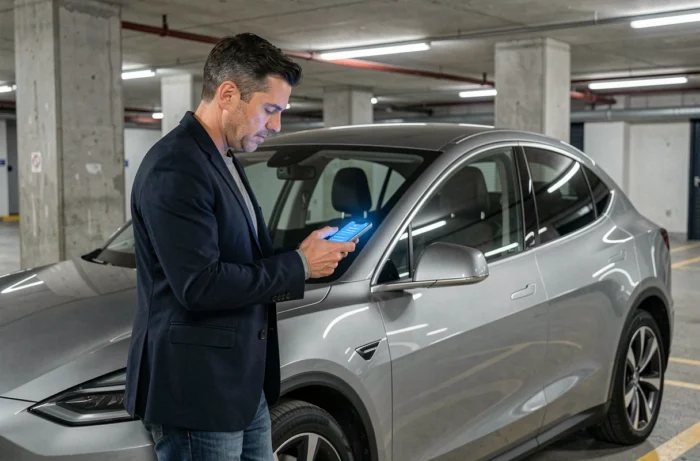
Receiving a notification on the central screen to update the regenerative braking software has become common in recent electric vehicles. These over-the-air (OTA) updates fix bugs, add functions, or adjust battery management without going to the workshop.
Convenience has a downside. UN regulations R155 and R156 impose strict cybersecurity and software update management processes on manufacturers. The requirements cover protection against external tampering and risk management in case of installation failure.
In short, if an update fails, the vehicle must remain functional and safe. This engineering constraint explains why some brands deploy their updates in gradual waves, region by region, rather than simultaneously.
What it means for the driver
- Battery autonomy or parking assistance responsiveness can improve without a trip to the dealership, sometimes overnight.
- The manufacturer can recall a batch of vehicles through a software patch instead of a physical recall, reducing intervention times to just a few days.
- The vehicle’s permanent connectivity raises questions about access to personal data, a point that the European Data Act, applicable since September 2025, begins to regulate.
Connected car data: an issue beyond tech
A connected car produces a continuous stream of information: geolocation, driving style, mechanical status, energy consumption. Until recently, this data largely remained under the exclusive control of the manufacturer.
The European data regulation changes this balance. It paves the way for data portability from the vehicle, allowing the driver or a third-party provider (independent garage, insurer, fleet manager) to access it under certain conditions.
Access to data is becoming a selection criterion just like autonomy or power. A fleet driver who can extract real consumption data from their vehicles optimizes costs much more effectively than with a simple mileage report.
Practical consequences in the market
Manufacturers that lock down the data ecosystem lose an argument against those who promote transparency. For independent workshops, the stakes are direct: access to diagnostic codes and update histories determines their ability to service increasingly software-driven cars.
This tug-of-war between open access and closed ecosystems is already shaping discussions at the European level. It also affects insurers, who offer plans adjusted to actual driving behavior, provided they can obtain the corresponding data.
Semi-autonomous driving: where do we really stand in 2024
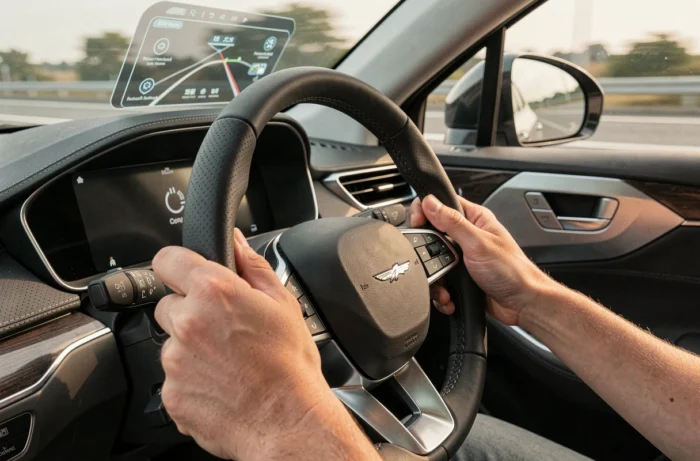
Level 2 systems (the driver keeps their hands on the wheel, but the vehicle manages acceleration, braking, and trajectory) are becoming widespread in mid-range models. Multi-angle cameras combined with millimeter-wave radar now cover almost all blind spots.
The transition to level 3, where the driver can look away under certain conditions, remains limited to a few models and low speeds. Approval varies by European country, and legal responsibility in the event of an accident shifts to the manufacturer, which slows deployments.
- Automatic emergency braking, now mandatory in the EU, also works for detecting pedestrians and cyclists.
- Active lane-keeping systems correct trajectory rather than simply alerting, reducing unintentional departures from the road.
- Driver attention monitoring through an interior infrared camera is spreading, particularly to counter excessive trust in driving assistance.
The reliability of these technologies heavily depends on conditions: heavy rain, faded road markings, winding mountain roads. In these scenarios, sensors reach their limits, and the system hands control back to the driver more frequently.
Automotive innovations in 2024 are not measured by the number of functions displayed on a technical sheet. They are judged by what we notice the least: braking that anticipates, an update that fixes a defect overnight, a recorder that only triggers when necessary. The most significant progress this year is both regulatory and technological, and that is precisely what makes it sustainable.