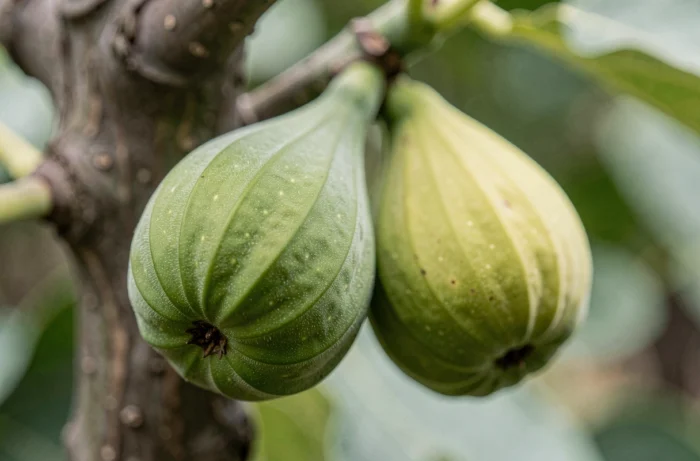
The fig harvested before maturity poses a problem that its harmless appearance does not suggest. Irritating latex, phototoxic compounds, digestive disorders: the mechanisms at play are well identified and deserve careful reading before biting into an unripe fruit or pruning a fig tree with bare hands.
Fig tree latex and furocoumarins: composition of an immature fruit
The white liquid that oozes from a fig picked too early is not just simple juice. This latex contains ficin, a proteolytic enzyme capable of breaking down proteins upon contact with skin and mucous membranes. The burning or tingling sensation in the mouth after tasting a green fig comes directly from this enzymatic action.
The latex also contains furocoumarins, phototoxic substances that react under the effect of UVA rays. Skin contact followed by sun exposure can cause phytophotodermatitis, with intense redness, blisters, and hyperpigmentation that can sometimes persist for several weeks. This risk also applies to the leaves of the fig tree and the sap residues left on the skin after pruning or harvesting.
To better understand the dangers of an unripe fig, it should be noted that the concentration of these compounds decreases as the fruit ripens on the tree. A fig that is still firm and green contains significantly more than a soft and colored fruit.
| Compound | Main Effect | Location |
|---|---|---|
| Ficin (proteolytic enzyme) | Mucosal irritation, skin burns | Latex of the immature fruit, stem, leaves |
| Furocoumarins | Phytophotodermatitis (reaction sun + sap) | Latex, leaves, sap residues on the skin |
| Tannins and bitter compounds | Digestive disorders, marked astringency | Flesh of the green fruit |
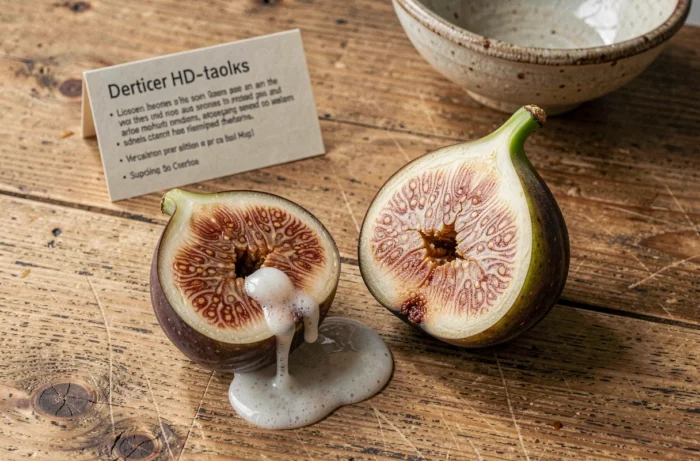
Green fig and digestive disorders: what ficin causes
Ficin does not only act on the skin. When ingested in quantity, it irritates the oral mucosa, esophagus, and stomach. Sensitive individuals may experience nausea, abdominal cramps, or diarrhea after consuming unripe figs.
The tannins concentrated in the green flesh exacerbate discomfort. They produce a strong astringency that dries the mouth and slow down transit in some individuals, while others experience the opposite effect. This individual variability makes the risk difficult to anticipate.
Cross-allergy and oral allergy syndrome
Individuals allergic to rubber latex have an increased risk of cross-reaction with the ficin from the fig tree. Oral allergy syndrome manifests as itching of the lips, swelling of the tongue or throat within minutes of ingestion. In contrast, a well-ripened and cooked fig significantly reduces the allergenic load.
Phytophotodermatitis in the garden: precautions during harvesting
The majority of cases of burns related to the fig tree do not occur at the table, but in the garden. Pruning branches, pulling leaves, or picking immature fruits splatters sap on the forearms and hands. If the person then exposes themselves to the sun, the phototoxic reaction can trigger within a few hours.
The precautions to apply during any handling of the fig tree are:
- Wear thick gloves and long sleeves, even in warm weather, to avoid any direct contact with the latex.
- Wash the skin immediately with water and soap after pruning or harvesting, before any sun exposure.
- Avoid handling the fig tree during peak sunlight hours, especially between late spring and late summer.
- Monitor for the appearance of redness or blisters within 24 to 48 hours following contact with the sap.
These measures apply to the fruits, but also to the leaves. Documented cases of phytophotodermatitis involve individuals who used fig leaves as poultices or in homemade cosmetic preparations.
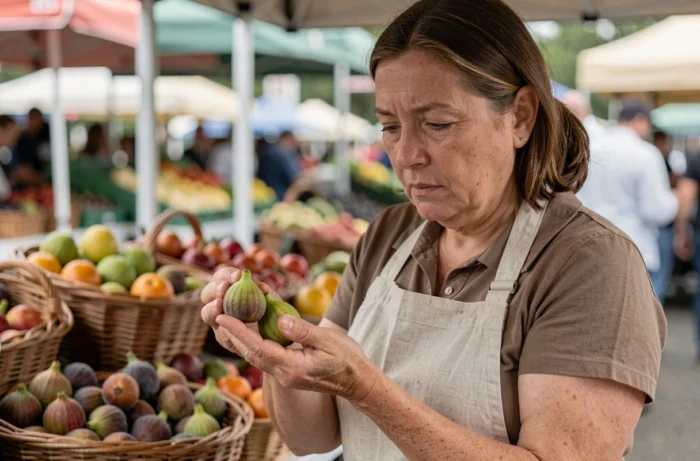
Maturity and post-harvest: a fig does not ripen in the basket
Unlike bananas, tomatoes, or avocados, the fig generally does not ripen after picking. A fruit picked too early will remain firm, slightly sweet, and full of latex. Waiting a few days on the countertop will not significantly change its composition.
This post-harvest behavior has a direct consequence: the timing of the harvest almost entirely determines the taste quality and safety of the fruit. A ripe fig is recognized by its softness to the touch, its uniform color (variable depending on the variety), and the absence of visible latex at the peduncle.
Differentiating immaturity and fermentation
A very ripe or damaged fig can develop an alcoholic or vinegary smell due to the action of yeasts and bacteria. This sign indicates deterioration due to fermentation, a problem distinct from the toxicity of latex. In this case, the fruit should be discarded, even if it simply appears too ripe.
Neutralizing bitterness through cooking: jam and blanching
For figs harvested slightly before full maturity, cooking remains the most reliable way to reduce irritation. Blanching in boiling water for a few minutes degrades some of the ficin and mitigates the bitterness of the tannins.
Transforming into jam, compote, or fruit paste combines prolonged heat and the addition of sugar, two factors that neutralize the astringent perception. Cooking does not eliminate the furocoumarins present on the skin of the fruit, but these pose a phototoxic risk only through skin contact followed by sun exposure, not through ingestion.
A fruit that is still hard and very green, far from its maturity, will remain of poor quality even after cooking. Blanching improves the palatability of slightly immature figs, not those harvested several weeks too early.
The most reliable criterion remains harvesting at the right time: a soft, fragrant fig that easily detaches from the branch will pose no digestive problem, skin risk, or taste disappointment.