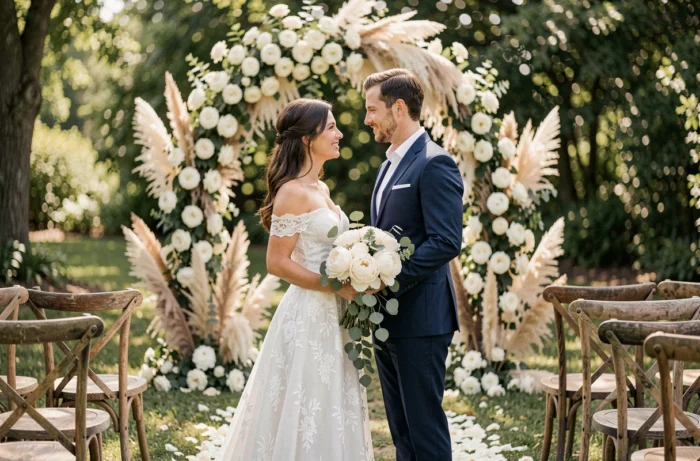
The wedding market is undergoing a transformation that goes beyond mere decoration or color palette choices. In recent years, a growing number of couples are redefining the very format of their union: the grand reception with an extensive guest list is giving way to shorter, more intimate celebrations focused on experience rather than protocol.
Organizing an unforgettable wedding this year requires understanding these shifts before choosing a venue, caterer, or theme.
Regulation of Temporary Structures for Outdoor Weddings
An increasing number of couples wish to celebrate their civil ceremony or cocktail reception under a marquee, stretch tent, or pagoda structure set up in a private garden or estate. This aesthetic choice involves a regulatory framework that most trend articles overlook.
In France, marquees, tents, and structures (CTS) intended to accommodate the public are subject to specific safety regulations. A declaration or request for authorization may be necessary depending on the capacity and location. The structures must meet requirements for wind resistance, fire reaction of the fabrics, and sizing of emergency exits.
When the event takes place in a public space (village square, municipal park), a temporary occupancy permit from the town hall is required. For private grounds, the obligations vary depending on the size of the structure and the duration of installation. Checking CTS compliance before signing a quote avoids surprises on the big day, or even a last-minute prefectural ban.
For those planning every detail of their outdoor reception, the platform https://www.e-mariage.fr/ allows for centralizing the search for service providers and venues suited to this type of configuration.
Civil Ceremony and Hybrid Formats: What is Changing in the Atmosphere of the Big Day
The civil ceremony is no longer a novelty, but its role in the day has transformed. It tends to become the central moment, sometimes more emotionally invested than the civil registry ceremony. Couples are dedicating more budget and preparation time to it, with personalized texts, chosen symbolic rituals, and a scenography designed as an intimate performance.
At the same time, the overall format of the wedding day is fragmenting. In Japan, a study by Yano Research published in 2026 on the bridal market indicates that less than half of couples hold both a ceremony and a reception. Outdoor photo shoots and small celebration meals are gaining relative prominence, at the expense of the traditional reception with a large number of guests.
This shift is not unique to Asia. In Europe, field feedback varies on the exact extent of the phenomenon, but the direction is clear: a significant portion of couples retains the wedding ritual while abandoning the grand reception in favor of a shared experience with a close circle. Concretely, this translates into formats such as:
- A civil ceremony followed by a dinner for about twenty guests, without a dance party
- A next-day brunch replacing the traditional cocktail reception, with a relaxed atmosphere
- A couple’s outdoor photo session (urban or nature) becoming the main memory, sometimes with no reception at all
Eco-Responsible Lighting and Pyrotechnics: Alternatives to Traditional Fireworks
The end-of-evening fireworks remain a strong marker of the wedding celebration. Environmental constraints and prefectural restrictions (drought, proximity to protected areas) complicate its organization in many French regions, especially during the summer.
Cold spark fountains and LED light shows are emerging as alternatives. Cold spark fountains create a spectacular visual effect without open flames, explosion noise, or pyrotechnic fallout. Their use indoors is possible in certain configurations, making them compatible with covered reception venues.
Controlled lighting installations (neons, architectural projections, low-power lasers) allow for creating strong moments without any pyrotechnic devices. The cost remains variable depending on the complexity of the setup, but the absence of a prefectural declaration simplifies the organization compared to a traditional fireworks display, which requires a licensed pyrotechnician and, depending on the caliber, an administrative permit.
Eco-Responsible Weddings: Beyond the Discourse, Concrete Choices
The label “eco-responsible wedding” has appeared in almost all trend lists for several years. The available data does not allow for precise measurement of how many couples are truly implementing a comprehensive approach, but certain spending categories concentrate the most tangible changes.
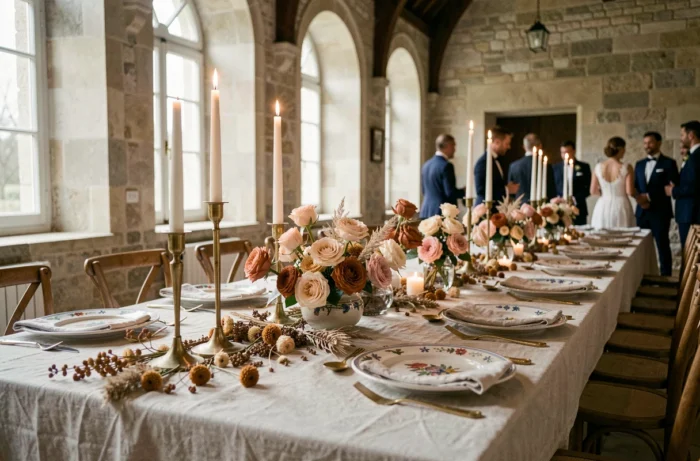
Disposable tableware is declining in favor of renting reusable tableware, even for outdoor cocktails. Local and seasonal flowers are gradually replacing imported arrangements, with a direct impact on the floral budget and the carbon footprint of the decoration category. Zero-waste or short-supply caterers remain in the minority, but their visibility is increasing at specialized fairs.
A less documented point concerns textiles. Rental tablecloths, napkins, and chair covers represent a significant logistical volume. A few providers now offer ranges in recycled fibers or unbleached linen, but the supply remains limited outside major metropolitan areas. The choice of venue often conditions the feasibility of a truly low-carbon wedding: a venue accessible by public transport reduces the guest transport category, the primary emission source of a wedding.
- Seasonal flowers grown locally, replacing Ecuadorian roses or out-of-season peonies
- Rental tableware instead of disposable, even for the cocktail reception
- Venue accessible without individual cars for the majority of guests
The global wedding planning market is experiencing sustained growth according to Fortune Business Insights, suggesting that couples are delegating more of the organization, including the eco-responsible dimension. Wedding planners are gradually integrating these criteria into their specifications, but field feedback varies on the proportion of clients who make it a real priority rather than a superficial argument.
Organizing an unforgettable wedding this year is less about accumulating decorative trends and more about structural choices: format of the day, venue compliance, real environmental impact. Couples who address these questions in advance save time, budget, and achieve a celebration that reflects them without administrative surprises.