Designing a garden is not just about planting a few shrubs and laying down a terrace. From choosing plants to managing water and ensuring visual coherence across different areas, every decision influences the final outcome. What criteria distinguish a harmonious garden from an outdoor space simply filled with plants?
Plant Resilience and Watering: Two Game-Changing Variables
Repeated heatwaves in France are fundamentally changing the way gardens are designed. In Chambord, successive heatwaves have forced teams to rethink plant compositions to include species capable of surviving without prolonged watering. The Ministry of Culture sometimes advises against watering certain flowerbeds to encourage a flora more resistant to drought.
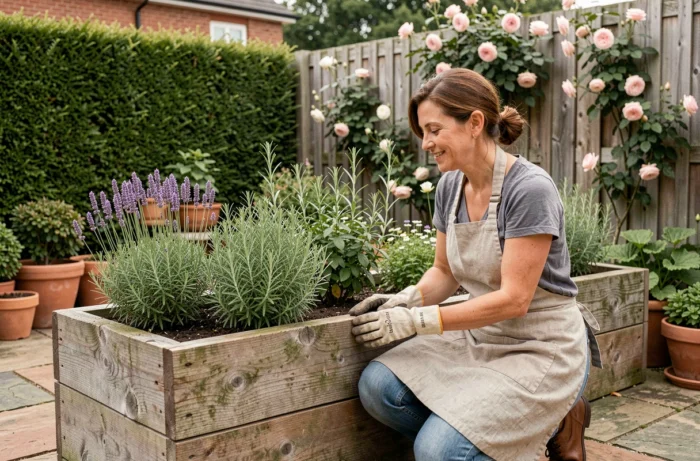
This observation extends far beyond historic gardens. For individuals, prioritizing drought-tolerant plants reduces dependence on watering and limits summer losses. Lavenders, ornamental grasses, sedums, and certain Mediterranean shrubs can withstand weeks without precipitation.
On the regulatory side, rainwater harvesting remains an underutilized lever. A simple outdoor rainwater collector requires no special procedures. However, as soon as a system supplies the interior of a building connected to the public network, a declaration at the town hall becomes mandatory, under penalty of a fine. This distinction should be integrated from the garden design stage, as it conditions the sizing of the collection system.
To explore options that combine aesthetics and sustainable management, the design on the Tradition Jardin site offers approaches tailored to these new climate constraints.
| Criterion | Classic Garden (lawn + water-intensive beds) | Resilient Garden (water-efficient species) |
|---|---|---|
| Summer watering needs | Daily to tri-weekly | Weekly to almost none once established |
| Resistance to water restrictions | Low (rapid degradation) | High |
| Annual maintenance | Frequent mowing, pruning, fertilization | Occasional pruning, mulching |
| Installation cost | Moderate (sod, topsoil) | Variable (plants, minerals, mulching) |
| Aesthetic evolution over 5 years | Stable with regular maintenance | Gains in volume and naturalness |
Structuring Garden Areas by Use Rather Than Aesthetics Alone
Most guides recommend considering circulation and defining living spaces. The problem is that many gardens end up with three identical zones connected by straight paths. Starting from actual daily use produces a more functional plan than a purely decorative layout.
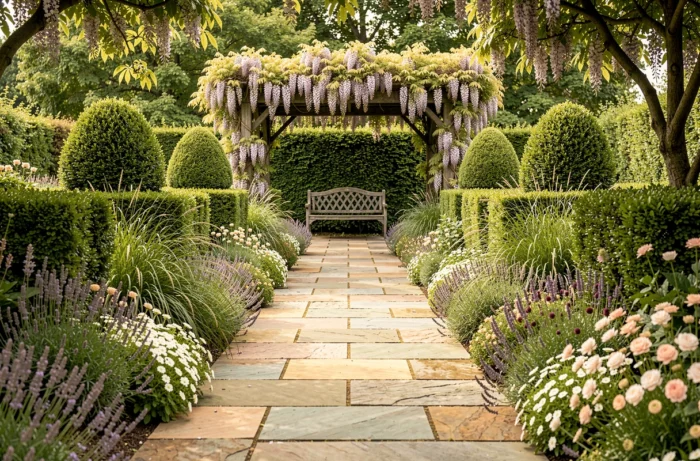
First identifying the most frequent routes (entrance, parking, vegetable garden, dining area) allows for the tracing of natural axes. Curved lines visually enlarge the space and break monotony, while straight lines are suitable for narrow plots where every meter counts.
Shaded Areas and Microclimates
Every garden has distinct microclimates: a wall facing full south stores heat, while a northeast corner remains cool even in summer. Rather than fighting against these constraints, leveraging them guides the choice of plants and the positioning of furniture.
- Shaded areas accommodate ferns, hostas, or heucheras, which suffer in full sun but thrive in partial shade.
- A warm wall facing southwest protects Mediterranean plants (rosemary, olive, agapanthus) from late frost.
- Ventilated spaces are suitable for tall grasses (miscanthus, stipa) that bring movement without fearing drafts.
This reasoning by microclimate avoids costly planting mistakes. A poorly placed shrub stagnates for years before it declines, while the same plant installed a few meters away could have doubled in size.
Material Coherence and Plant Palette: Limiting Choices for Greater Harmony
A garden that mixes white gravel, railroad ties, gray concrete slabs, and black plastic borders lacks visual coherence, even if each element is of high quality. Limiting to two or three materials creates a unity that the eye perceives immediately.
Local natural stone remains the safest choice in terms of landscape integration. It ages well, develops a patina, and matches most facades. Wood (terrace, pergola, borders) adds warmth but requires regular maintenance, unless opting for class 4 species or composite wood.
Plant Color Palette
The same logic of restriction applies to plants. A bed composed of five different shades creates visual noise. Two dominant colors plus one accent color are sufficient for a structured effect. For example, a backdrop of green and silver foliage punctuated by white or mauve blooms creates a coherent atmosphere from spring to autumn.
Evergreen foliage (boxwood, pittosporum, photinia) ensures winter structure, while perennials bring seasonal variations. The contrast between textures (broad leaves against fine foliage) compensates for the sobriety of the palette.
Realistic Maintenance of the Landscaped Garden: Anticipating Available Time
The most beautiful design loses its appeal if no one can maintain it. Before finalizing a plan, honestly assessing the weekly time dedicated to the garden avoids disillusionment.
- A natural landscape-style garden (grasses, perennials, ground covers) requires a few hours per month once established.
- A structured garden with trimmed hedges, topiaries, and short grass requires a minimum weekly intervention.
- A vegetable garden integrated into the ornamental garden adds a seasonal workload concentrated between April and October.
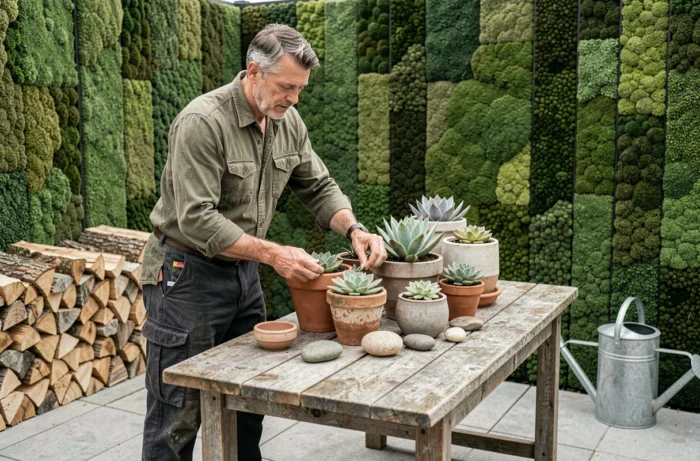
The garden style must correspond to the actual maintenance time available. A mineral Japanese garden with a few maples and mosses appears clean, but meticulous weeding and raking of gravel require regular attention. Conversely, a well-mulched perennial bed can be managed with two major clean-ups per year.
Organic mulching (wood chip, flax flakes) or mineral (gravel, pumice) reduces the frequency of weeding and limits evaporation. Applied at a sufficient thickness, it constitutes the most time-efficient maintenance gesture.
The design of a garden gains longevity when it integrates from the outset the climatic constraints, the reality of the soil, and the available maintenance time. A water-efficient garden, structured by usage zones and limited to a few well-chosen materials, can withstand the seasons without needing a complete overhaul every three years.